
How to Remove Stains from Quartzite Countertops
Quartzite can be confusing because it is often described with contradicting terms: it is called “rock-hard” and “highly durable,” yet you are told it can stain, absorb water, or need careful sealing. The truth is that quartzite countertops are an exceptional choice for kitchens, but like any natural stone, they need the right care. Let’s break down how quartzite responds to everyday spills and the most effective ways to remove stains from quartzite countertops when they happen.
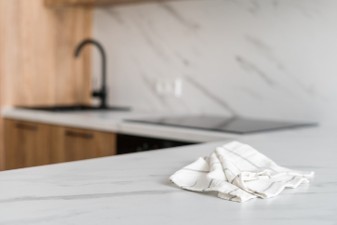
Why Stains Develop on Quartzite Countertops
Quartzite starts its life as sandstone, which is a sedimentary rock made of tiny grains of sand tightly packed together with microscopic gaps (pores) between them. Over millions of years, tectonic heat and immense pressure deep within the Earth compress and fuse that sandstone into solid quartzite.
Even though the stone becomes incredibly dense, those microscopic gaps between the original sand grains do not completely disappear. They remain as a network of tiny, invisible tunnels snaking throughout the entire slab. If you pour liquid onto unsealed quartzite, that liquid can slide directly down into those tunnels like water into a dense sponge and can’t just be wiped off the surface.
Common Stains on Quartzite Countertops
Porous areas or unsealed stones are generally more susceptible to discoloration. That’s why regular cleaning and proper maintenance are important to protect the stone. Common causes of stains on quartzite countertops include:
- Cooking oils and grease
- Coffee and tea
- Red wine and fruit juices
- Tomato-based sauces
- Food spills
- Cosmetics and personal-care products
- Hard-water deposits and mineral buildup
Identify the Type of Stain Before Cleaning
Before reaching for a cleaning product, take a closer look at the mark. Different types of stains may require different approaches, and using the wrong cleaner can make the problem worse. You can inadvertently drive a stain deeper or permanently dull the polished finish. So, the first thing you’ll need to do is inspect the blemish under clear, direct lighting to see what it is:
- Oil-Based Stains: Cooking oils, butter, cosmetics, and lotions typically create a dark, saturated spot that looks permanently “wet” even after the surface has been wiped dry.
- Organic Stains: Coffee, tea, dark wine, fruit juices, and tomato-based sauces add visible pigment to the stone, often leaving behind a distinct brown, pink, red, or purple shadow.
- Rust or Metal Stains: Copper or iron reactions leave orange, tea-colored, or reddish-brown marks. These commonly develop under metal cans, cast-iron pans, or metal soap dispensers left on damp counters.
- Hard Water Spots: Standing water around faucets and sinks can evaporate, leaving behind white, hazy mineral rings.
How to Remove Oil Stains from Quartzite Countertops
Because cooking oils can penetrate porous stone, simply wiping the surface may not remove oil stains on quartzite countertops. A poultice can help draw oil from the stone. A simple approach is:
- Clean and Dry: Wipe the area with warm water and a pH-neutral stone cleaner, then dry thoroughly.
- Make a Poultice: Mix baking soda with warm water until it forms a thick paste.
- Apply: Spread about ¼-inch of paste over the stain, extending slightly beyond its edges.
- Cover and Wait: Cover with plastic wrap, secure the edges, and poke a few small holes. Leave it for 24 to 48 hours.
- Remove: Once completely dry, gently scrape away the hardened paste with a plastic scraper. Rinse with clean water and dry with a soft microfiber cloth.
Removing Food and Beverage Stains
Food and drinks are among the most common sources of discoloration in kitchens. The sooner you clean a spill; the less opportunity it has to penetrate the stone. For fresh spills:
- Blot the spill with a soft cloth or paper towel rather than wiping it across the surface.
- Clean the area with a pH-neutral natural-stone cleaner.
- Rinse with clean water if recommended by the cleaner.
- Dry the countertop thoroughly with a soft cloth.
For older stains, the appropriate removal method depends on what caused the discoloration. A professional may use a poultice or another stone-safe treatment for stains that have absorbed into the countertop.
Cleaning Products to Avoid
When managing premium quartzite, executing proper quartzite countertop maintenance means knowing what not to use. Many common household cleaners rely on acidic bases or harsh abrasives that will break down your sealer and scar your stone finish. Keep these items away from your countertops:
- Vinegar, Lemon, or Citrus Cleaners: Natural acids erode stone protective barriers rapidly and can create permanent dullness.
- Commercial Bath Cleaners or Lime Removers: These aggressive chemical formulas can chemically burn or etch natural stone.
- Abrasive Powders and Bleach: These can strip protective seals away and can structurally weaken resins used during slab manufacturing.
- Magic Erasers and Heavy Scrubbing Pads: These function like micro-sandpaper, leaving behind noticeable uneven patches in polished or leathered finishes.
Is It Highly Durable If It Stains?
In the stone industry, durability usually refers to scratch resistance and hardness. Quartzite is one of the hardest natural stones available. On the Mohs hardness scale (where a diamond is a 10), quartzite sits at a 7. Granite sits at a 6 to 6.5, and marble sits around a 3 to 4.
So, it is highly durable because it resists physical abuse (scratches, heat, impacts) and acid damage incredibly well. However, physical hardness has nothing to do with whether a stone has pores. A stone can be hard enough to scratch glass but still have microscopic holes that let liquids sink in. That’s why we seal it.
Seal Your Quartzite Countertop
Because quartzite is hard enough to scratch glass and completely resists heat, it is easy to assume it leaves the factory ready for anything. However, its physical hardness does not make a stone waterproof. You must seal your quartzite countertop because when you apply a high-quality, impregnating stone sealer, it sinks deep into the microscopic pores and tunnels of the slab. Once inside, the sealer cures and hardens, essentially plugging up the stone’s internal sponge. By keeping your quartzite properly sealed, you achieve three vital things:
- Stain Prevention: Liquids like red wine, morning coffee, or olive oil are kept floating safely on top of the stone, giving you plenty of time to wipe them away before they can sink in.
- Bacteria Protection: Sealing fills the voids where moisture and food residue can get trapped, keeping your kitchen prep surfaces clean and hygienic.
- Preserving the Finish: It maintains the deep, rich clarity of your stone’s polished or leathered texture, preventing a dull or cloudy appearance over time.
Find the Right Countertop for Your Lifestyle
If you’re worried about how to remove stains from quartzite countertops, reach out to Signature Marble and Granite, serving Utah County, Salt Lake County, Davis County, Summit County, and Weber County. We can help you explore your countertop options and find a material that fits your lifestyle. Our team will walk you through the options and make sure you feel confident in your choice from the start.
FAQs About Quartzite Stain Removal
How Can I Tell if a Mark on My Quartzite Countertop Is a Stain or Etching?
Stains are dark or colored discolorations trapped inside the pores, while the stone surface remains perfectly smooth and reflective. Etching is surface chemical damage that creates a light, dull, or cloudy patch that feels slightly rough and lacks reflection under light.
How Often Should You Reseal Quartzite Countertops?
As a general rule for quartzite countertop maintenance, you should reseal your countertops every 6 to 12 months. However, because quartzite is a natural stone, there is no single “magic number” that applies to every single kitchen. The perfect timeline for your specific home depends on the exact slab.
What Are the Warning Signs That My Quartzite Sealer Is Failing?
One common indication is that liquids no longer bead up on the surface and instead begin absorbing into the stone more quickly. Darkened areas around spills or increased susceptibility to staining can also indicate that the protective sealer needs attention.
Can Water Alone Cause Discoloration on Quartzite Countertops?
Water itself does not typically stain quartzite in the same way that oil, wine, or coffee can. However, water can contribute to mineral deposits or temporarily darken porous stone. Hard-water residue may leave white or cloudy spots that look like discoloration but are actually mineral buildup.
Is Quartzite More Stain-Resistant Than Marble?
Quartzite is generally more resistant to scratching and everyday wear than marble, but both are natural stones and can be susceptible to staining without appropriate care and sealing.