
How to Clean Quartzite Countertops: The Complete Do’s & Don’ts
How to Clean Quartzite Countertops: The Complete Do’s & Don’ts
Quartzite countertops have become a popular choice for homeowners because of the way they combine the natural beauty of stone with durability. The premium surface features marble-like veining and granite-level strength, bringing elegance to kitchens and bathrooms where spills and moisture are common. Speaking of spills, you might be wondering how to clean quartzite if you have it in your home. Following the right process will protect the finish and preserve its beauty over the years. Part of our service at Signature Marble & Granite is helping homeowners understand how to care for their countertops.
Understanding Quartzite: What Makes It Unique
Quartzite is a natural rock that forms when sandstone is exposed to intense heat and pressure beneath the Earth’s surface. This process fuses quartz grains, creating a dense and durable stone. Unlike engineered quartz, quartzite is entirely natural, so it requires sealing to protect it against moisture and staining. However, even that extra step makes it a preferred choice because of its:
- Distinct veining patterns similar to marble
- Higher resistance to heat compared to many surfaces
- Hard, crystalline surface that resists scratching
- Natural variation that gives each slab a one-of-a-kind look
Why Proper Quartzite Cleaning Matters
Quartzite may be strong, but it’s not maintenance-free. It’s essential to use the right cleaners for quartzite countertops to avoid dulling the finish or weakening the sealant. Neglect or harsh cleaning methods can lead to staining over time and premature replacement. A consistent but simple approach is the most effective way to:
- Preserve the stone’s natural color and veining
- Prevent buildup that can damage the surface
- Extend the life of the sealant
- Maintain a polished, high-end appearance
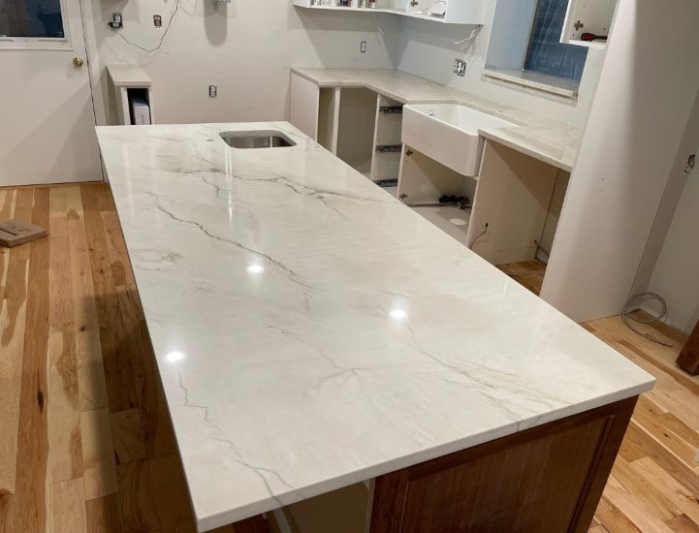
Step-by-Step Quartzite Deep Cleaning
Daily wiping with a mix of warm water and dish soap handles most messes, but occasionally deep quartzite countertop cleaning keeps the surface looking its best. This process removes residue without damaging the stone. We suggest this gentle method and avoid any aggressive scrubbing:
- Clear the surface completely, removing appliances and debris
- Mix a mild, pH-balanced stone cleaner with warm water
- Use a soft cloth or sponge to gently clean the surface
- Focus on high-use areas where oils or residue may accumulate
- Rinse with clean water to remove any remaining cleaner
- Dry with a microfiber towel to prevent streak or water spots
Do’s and Don’ts When Cleaning Quartzite Countertops
Maintaining quartzite doesn’t require complicated routines, but consistency matters.
What to Do:
- Wipe spills promptly, especially acidic substances like juice or wine
- Use a soft cloth or non-abrasive sponge
- Clean regularly with a stone-safe cleaner
- Reseal periodically based on usage and manufacturer recommendations
Avoiding these common mistakes will significantly extend the life and appearance of your countertops.
What to Avoid:
- Harsh chemical cleaners such as bleach or ammonia
- Abrasive pads or scrubbers that can scratch the surface
- Vinegar or acidic solutions that can break down the sealant
- Allowing spills to sit for extended periods
- Using generic household cleaners not designed for natural stone
How to Clean Quartzite Countertops That Are Stained
Even with proper sealing, quartzite can occasionally develop stains if spills are left untreated. Avoid the urge to scrub aggressively because it can further damage the surface. The key is to address stains quickly and use the right method, and repeat as needed until the stain lifts:
- Organic Stains – If the stain is from coffee, wine, or food, apply a stone-safe poultice or baking soda paste and let it sit for several hours or overnight. Gently wipe and rinse clean.
- Oil-Based Stains – For something like grease or cosmetics, use a degreasing stone cleaner.
Frequently Asked Questions
Yes, quartzite is naturally porous, which is why sealing is recommended. A proper seal helps prevent liquids from penetrating the surface and causing stains.
Quartzite is one of the hardest natural stones used in countertops. It resists scratching and heat well, making it ideal for high-traffic kitchens and bathrooms.
A pH-balanced cleaner specifically formulated for natural stone is the safest option. Mild dish soap diluted with water can also be used for routine cleaning.
Yes. Avoid acidic cleaners, vinegar, bleach, and ammonia-based products. These can degrade the sealant and damage the stone’s surface over time.
Routine cleaning and prompt spill removal are the most effective ways to maintain quartzite. Consider periodic resealing as recommended by countertop professionals.
Upgrade Your Countertops with Signature Marble and Granite
Signature Marble and Granite helps customers understand proper quartzite countertop care throughout Utah County, Salt Lake County, Davis County, Summit County, and Weber County to protect the surface and maintain lasting beauty. If it’s time to upgrade or you’re researching which material might be best for your family, contact us to schedule a consultation. Our company is known for our expert craftsmanship and high-quality countertops. We’ll help you select the perfect slab and complete the project with precise installation.