
How to Remove Stains from Marble
Very few things match the jaw-dropping luxury of a marble countertop. The custom veining and natural patterns look like an absolute work of art in your kitchen or bathroom. But we also know that sinking feeling in your stomach when you spot a dark shadow from an oil bottle or a mysterious ring left over from dinner.
Because marble is a premium natural stone, it has a reputation for being a bit high maintenance. But you do not have to baby your stone forever, and a blemish isn’t the end of the world. We have your guide on how to clean stained marble without ruining its gorgeous finish. Let’s walk through some tricks to get your stone looking flawless again.
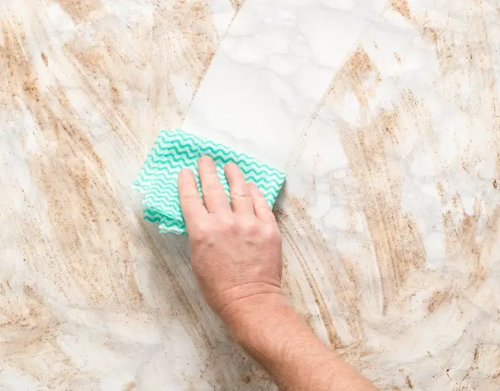
Why Marble Stains So Easily
To master marble maintenance, you must understand what makes this stone unique. Marbles are primarily composed of calcium carbonate. This biological structure makes it softer and more porous than other common countertop materials like durable granite, engineered quartz, or crystalline quartzite.
Marble has a microscopic network of open pores, which means it can absorb certain liquids rather than simply letting them sit on the surface. Coffee, wine, oil, makeup, and other substances can work their way into the stone, especially when the marble is not adequately sealed. And unfortunately, you cannot scrape away a blemish that lives inside the stone.
Stain or Etch? Understanding the Difference
One of the most important things to figure out before attempting marble stain removal is whether you are dealing with a stain at all. If it feels perfectly smooth but looks dark, it’s a true stain. Something like cooking oil, coffee, or wine has soaked deep inside the pores. But an etch is different. Instead of soaking into the stone, an acidic substance reacts with the marble itself and damages the surface. Lemon juice, vinegar, wine, and some household cleaners can cause this type of reaction. You can’t pull an etch out because nothing is inside. The surface simply needs a light re-polishing.
How to Lift Oil Stains from Your Marble
Cooking oil, salad dressing, lotion, and butter love to leave dark, greasy halos on marble. Because oil can soak into the stone’s pores, wiping the surface may not be enough to remove the discoloration. For a small, fresh oil stain, you can try a simple poultice, an absorbent paste designed to draw a substance out of porous stone as it dries. Here’s a DIY recipe you can try:
- Mix the Paste: Combine basic baking soda with a few drops of water and mild dish soap. Mix until it reaches the consistency of smooth peanut butter.
- Apply: Moisten the blemish with water, then spread the paste over the spot about 1/4-inch thick.
- Cover: Place plastic wrap over the paste and tape down the edges. Poke 2 to 3 tiny pinholes in the top to let it vent.
- Wait: Let it sit for 24 to 48 hours. As it dries, the absorbent material can help draw oil toward the surface of the marble.
- Clean: Once completely dry, gently lift the hardened paste with a plastic scraper or another non-abrasive tool. Wipe the area with a soft, damp cloth and dry it thoroughly.
Keep in mind that a DIY poultice may not completely remove every oil stain. The longer the oil has been in the marble and the deeper it has penetrated, the more difficult the stain may be to treat. Avoid repeatedly applying stronger chemicals or abrasive cleaners if the first attempt doesn’t work.
How to Treat Water Stains and Hard Water Marks
Water around a sink or bathroom vanity is almost unavoidable. Unfortunately, hard water can leave behind mineral deposits that make otherwise beautiful marble look cloudy, chalky, or spotted.
Before reaching for the vinegar, don’t. While vinegar is a popular household solution for hard water buildup, its acidity can etch marble.
Instead, use a soft microfiber cloth and a pH-neutral cleaner made specifically for natural stone. For light surface residue, gentle cleaning may be all you need.
Marble Cleaning Mistakes to Avoid
When you’re trying to clean a stain, it’s tempting to assume that a stronger product or a little extra scrubbing will get the job done. With marble, that approach can backfire. Keep these common mistakes off your marble cleaning checklist:
- Don’t use vinegar or lemon juice: Their acidity can etch marble.
- Don’t use abrasive scrubbers: Steel wool, rough scouring pads, and abrasive powders can scratch or dull the finish.
- Don’t forget to check the label: Some contain ingredients that are too harsh for natural stone.
- Don’t aggressively scrub a stain: Scrubbing may spread a substance rather than remove it.
- Don’t let spills sit: The longer certain liquids remain on porous marble, the more opportunity they have to soak in.
- Don’t mix cleaning chemicals: Combining products can damage your countertop and create dangerous fumes.
- Don’t assume every mark is a stain: Etching, moisture, and mineral buildup can look similar but require different solutions.
Preventing Future Marble Countertop Stains with Sealing
Sealing is one of the best ways to protect marble from future stains. Because marble is porous, a quality sealer helps prevent liquids from soaking into the stone and gives you more time to wipe up spills.
Sealing does not make marble completely stain-proof, but it can significantly reduce absorption and make everyday marble countertop care easier.
Choosing the Right Countertop for Your Lifestyle
Of course, choosing the right countertop material in the first place is also part of creating a surface that works for you. If you’re worried about how to remove stains from marble, explore Signature Marble and Granite’s countertop options in Utah County, Salt Lake County, Davis County, Summit County, or Weber County to see the materials available for your next kitchen or bathroom project.
FAQs About Removing Stains from Marble
How Can I Tell If My Marble Countertop Is Properly Sealed?
Pour a few drops of water on your marble. If the water beads tightly on top after 15 minutes, your sealer is intact. If the stone absorbs the water and turns dark, it is time to reseal.
Can Marble Stains Disappear on Their Own Over Time?
Very faint organic marks (like a light tea shadow) can occasionally fade after several months due to indoor UV light and airflow. However, dense oil or grease stains will not disappear without targeted poultice extraction.
Can Old Marble Stains Still Be Removed Successfully?
Yes. Older, deep-set stains can still be removed, though they require patience. You may need to repeat the poultice process 2 to 4 times to pull up deep layers.
Why Does Marble Sometimes Look Darker After Cleaning or Stain Treatment?
Marble retains moisture easily. The wet poultice paste temporarily hydrates the stone, causing a dark ghosted patch. Allow the area to air-dry completely for 48 to 72 hours, and it will return to its normal color.
Does Sealing Marble Completely Prevent Stains?
No. Impregnating sealers do not make stone stain-proof; they slow down absorption rates. Sealing simply gives you a window of time to wipe up spills before they sink into the stone’s pores.