How to Polish Quartz Countertops
A quartz countertop can be completely clean and still look a little off when the light hits it. Maybe the entire surface has lost some of its original luster, or one area just appears slightly cloudier than the rest, no matter how many times you wipe it down.
Understanding Quartz Countertop Finishes
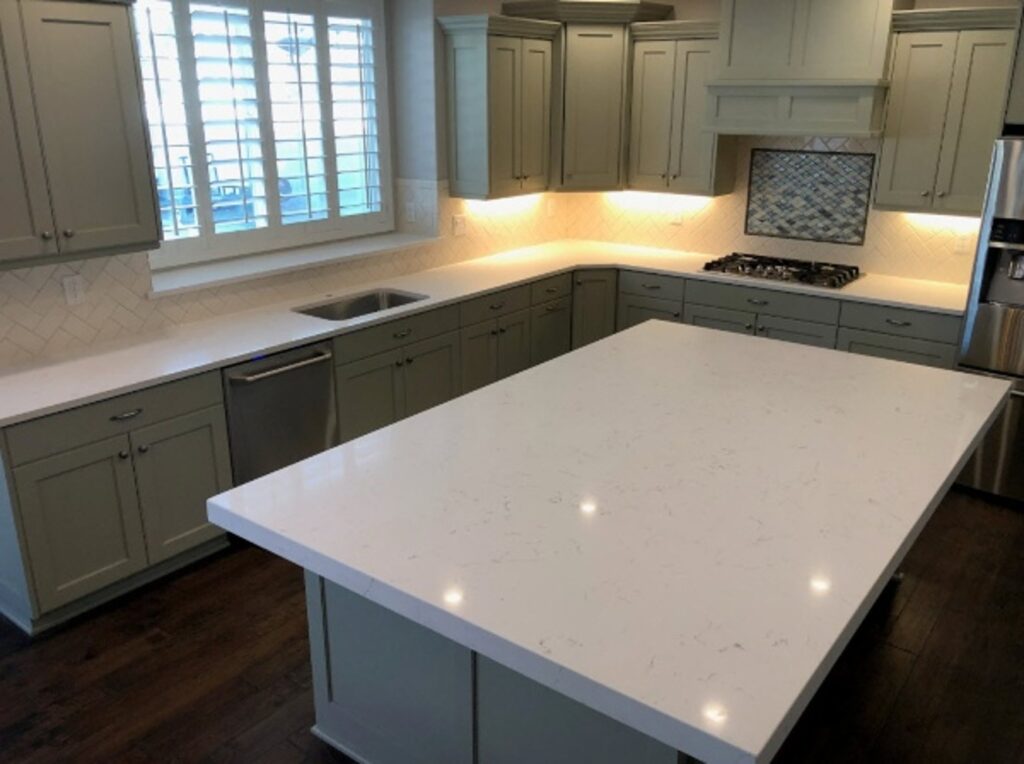
Quartz usually comes with a polished or honed finish that was established well before the countertop ever reached your home. Polished quartz has a smooth, reflective surface, whereas a honed finish has a softer appearance and diffuses more of the light around it. So, your countertops’ original finish, whether it’s polished or honed, is going to be your most helpful point of comparison.
If your polished countertop now looks hazy, something may be coating it or muting its gloss. But if you have honed quartz, its lower sheen is an intentional part of the design. Trying to give it the same shine as polished quartz could leave the surface looking uneven.
Why Polishing Quartz Countertops Matters
Your quartz countertop catches light across such a large part of the room that even a thin layer of residue can make the entire surface look a little less clean. Fingerprints show more easily that colors lose some of their depth, and polished areas no longer have the same consistent gloss from one end to the other.
Removing that buildup and buffing the surface can bring all those shiny little details back. It’ll also give you a clearer look at the quartz itself, so you can tell whether an area simply needs cleaning or has a scratch or another form of damage that may deserve a professional look.
Gather the Right Tools Before You Begin
We’re here to give you some quartz care tips, but we’d be remiss not to mention first some of the things you’ll need to get the job done. And the great news is that you don’t need any power tools or abrasive compounds to make a visible difference. Just be sure to check the manufacturer’s instructions for your particular type of quartz, and then gather a few basic items:
- Soft Microfiber Cloths – Keep separate clean cloths ready for washing, rinsing, drying, and buffing so you don’t spread residue back across the countertop.
- Warm Water – Warm water can loosen grease and residue without exposing the surface to unnecessary chemicals.
- An Approved Quartz Cleaner – Choose a nonabrasive cleaner that your quartz manufacturer identifies as safe for that particular surface.
- Nonabrasive Sponge – Use only the soft side to work through stubborn film without creating fine scratches in the finish.
- Plastic Scraper – If the manufacturer permits one, a plastic scraper can lift dried material without the sharp edge of a metal tool.
How to Polish Quartz Countertops Step by Step
Once you know which products are safe for your countertop, clear the entire surface so you can clean it evenly. You can then work through these steps:
- Inspect the Countertop – Look across the surface in good light and note whether the dullness covers a broad area or follows one spill, appliance, or sink edge.
- Remove Loose Debris – Wipe away crumbs and grit before washing so they don’t drag beneath your cloth and potentially create scratches.
- Clean the Surface – Apply your approved cleaner as directed and work in manageable sections with a soft cloth or nonabrasive sponge.
- Rinse Away the Cleaner – Use a fresh, damp cloth to remove the cleaner completely, paying close attention to any areas that still feel slick.
- Dry the Quartz Thoroughly – Wipe the surface with a clean, dry microfiber cloth so water and leftover cleaner don’t create another haze.
- Buff the Finish – Use a fresh cloth and buff gently until the light moves evenly across the polished surface.
- Recheck Any Dull Areas – If the same spot still looks scratched, discolored, or uneven, stop there and have a countertop specialist inspect it.
Choosing the Best Quartz Countertop Polish
The best polish to use on your quartz countertops is one that’s specifically approved for your brand and finish of quartz. So before buying anything, you’ll want to read the polish’s care instructions and product label closely, because a general “stone polish” may be formulated for a porous natural stone rather than engineered quartz.
You’ll also want to avoid waxes, sealers, abrasive powders, and oily products unless your manufacturer expressly recommends them. Those treatments can leave a coating that collects fingerprints or makes the sheen look inconsistent. When you’re trying a new quartz countertop polish, test it in a discreet area before applying it across the whole surface.
Common Reasons Quartz Countertops Look Dull
When a clean, dry surface of quartz still doesn’t look the way it once did, where and how the dullness appears can tell you quite a bit. Here are some common reasons why your quartz countertops still look a little dull:
Cleaner or Soap Residue
Too much product or an incomplete rinse can leave a cloudy film across a broad section of the countertop.
Hard-Water Deposits
Mineral residue tends to collect around faucets and other places where water regularly dries on the surface.
Grease Buildup
Cooking oils can spread into a thin layer that catches more dust and softens the countertop’s reflection.
Topical Product Buildup
Waxes and unapproved polishes may create overlapping layers rather than make quartz countertops shine evenly.
Surface Damage
Rough scrubbers, abrasive powders, harsh chemicals, or direct cutting can physically alter the finish in one concentrated area.
Preserve Your Quartz with Signature Marble and Granite
Once you restore the original finish, some simple quartz countertop maintenance will help you preserve its beautiful appearance. But if permanent scratches or damage have left you wishing your countertops looked the way they once did, it may be time to explore what a new quartz surface could offer your kitchen or bathroom. And our team at Signature Marble and Granite can help you start fresh. We’ll include you in the design process, custom-fabricate your new quartz countertops, and install them with precision.
Contact our experts today to explore our quartz countertops and request a free estimate for your Northern Utah home.
Polishing Quartz Countertops – Frequently Asked Questions
How Often Should Quartz Countertops Be Polished?
You generally won’t need to polish quartz on a formal schedule. Just clean and buff the countertop whenever residue begins to soften its original shine. Always be sure to follow the care instructions from your quartz manufacturer, as some brands advise against applying any additional polish at all.
Can Quartz Become Permanently Dull?
Unfortunately, it can. Abrasive cleaning, harsh chemicals, excessive heat, and physical wear can permanently alter certain areas of the finish. If routine cleaning doesn’t improve the appearance, have a professional inspect the surface before you try a stronger product or polishing tool.
Does Polished Quartz Need Different Care Than Honed Quartz?
Yes, because honed quartz has an intentionally softer, more matte finish. It may show oils, fingerprints, or uneven marks more prominently than polished quartz. Make sure you follow the manufacturer’s cleaning instructions and don’t apply a gloss-producing product in an attempt to make the surface reflective.
Can a Professional Restore Scratched Quartz?
Sometimes, depending on the depth and location of the scratch. A professional can examine whether the damage is repairable and whether refinishing that area would create a noticeable difference in sheen. Avoid sanding or mechanically polishing it yourself because you could enlarge the affected area.
Is It Necessary to Seal Quartz Countertops After Polishing?
Usually, no. Quartz is engineered to resist absorption, and many manufacturers specifically state that their surfaces don’t need sealers. Applying one without checking your product’s care instructions could leave a film or inconsistent gloss. It’s always best to follow the guidance issued for your particular quartz countertop.
What Is the Biggest Quartz Polishing Mistake?
The biggest mistake is trying to polish the surface before you know why it looks dull. If cleaner or residue is hiding the shine, a wash and buff may be all your countertop needs. But if the finish is scratched or damaged, using an abrasive pad, polishing compound, or power buffer yourself could make that uneven area even more noticeable. When gentle cleaning doesn’t improve it, let a countertop professional take a look before you try anything stronger.