
How Long Can a Granite Countertop Be Without a Seam?
Granite countertops are available in a wide range of colors, patterns, and slab sizes, making them a popular choice for kitchens and other spaces. One common question homeowner have during the planning process is how long a granite countertop can be without a seam.
The answer depends primarily on the granite slab size, the dimensions of the countertop, and the layout of the space. While some countertops can be fabricated from a single slab, larger or more complex designs may require multiple pieces. Careful planning and professional granite countertop installation can help determine the best approach for both appearance and function.
Understanding Granite Slab Sizes
Granite slabs are produced in different dimensions, and there is no single standard size that applies to every slab. Many slabs are approximately 105 to 125 inches long and 54 to 78 inches wide, although available dimensions vary by material and supplier.
These dimensions establish an important starting point when determining granite countertop seam length. If a countertop section is shorter than the usable dimensions of the selected slab, it may be possible to fabricate that section from one piece.
However, slab dimensions are only part of the equation. Countertop layouts may include corners, angles, cutouts, or other features that affect how the stone can be fabricated. The usable area of a slab also depends on the specific layout and how the stone pattern is oriented.
How Long Can Granite Be Without a Seam?
There is no universal maximum length for a granite countertop without a seam. A countertop can potentially span the length of a slab without a seam if its dimensions and design allow it to be cut from a single piece.
For example, if a straight countertop section fits within the usable length and width of the selected slab, a single-piece design may be possible. Large granite countertops, however, may exceed the dimensions of an individual slab and require more than one piece.
The answer to how long granite can be without a seam therefore depends on the specific stone and project rather than a fixed number.
Homeowners should also consider how the countertop will be transported and brought into the space. A piece that technically fits within a slab’s dimensions may still present handling or access challenges if it is extremely large or heavy.
When Granite Countertops Need Seams
A seam becomes necessary when the countertop design cannot be fabricated from one piece of stone. This can happen because of the overall dimensions, the shape of the countertop, or the layout of the room. Several factors can influence the need for a seam:
- Countertop Length: A section that exceeds the usable dimensions of the selected slab may require multiple pieces.
- Countertop Depth: Extra-wide sections may exceed the slab’s available width.
- Corners & Angles: L-shaped and other complex layouts may require separate pieces depending on the design.
- Islands: Large islands can require careful slab planning, particularly when the island dimensions approach or exceed the available stone.
- Material Availability: The dimensions of the available slab can determine whether a particular design can be fabricated without a seam.
Rather than designing around a specific seam location from the beginning, your fabricator can evaluate the slab and layout together to determine the most practical solution.
Can Seamless Granite Countertops Really Exist?
Yes. Seamless granite countertops are possible when a countertop section can be fabricated from a single piece of stone. However, “seamless” should not necessarily be interpreted as a guarantee that an entire kitchen countertop will never contain a seam.
A kitchen with multiple countertop sections may require seams even when individual sections can each be cut from one slab. Islands, peninsulas, corners, and other design features can all affect the final layout.
The goal is often to use the available slab efficiently while positioning necessary seams where they are least visually distracting.
How Professionals Make Seams Less Noticeable
Even when a seam is necessary, skilled fabrication can make it considerably less noticeable. Countertop seam placement is one of the most important considerations. Seams may be positioned in less prominent areas or where natural breaks in the countertop design make them less obvious.
The color and pattern of the granite also matter. A stone with pronounced veining or movement may require careful planning to achieve a visually cohesive result at the seam.
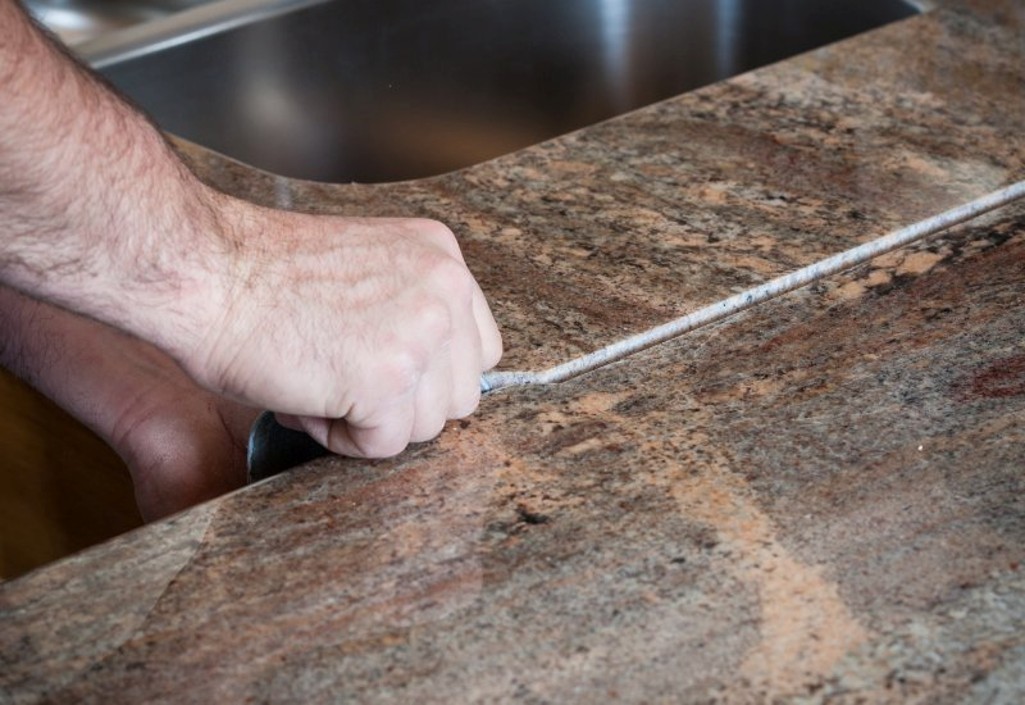
Professional fabricators also use appropriate seam materials and techniques to create a secure, clean-looking joint. The quality of the fabrication and installation can have a significant effect on the finished appearance.
Plan Your Granite Countertops with Signature Marble & Granite
The right granite countertop installation starts with understanding the relationship between your chosen slab and the dimensions of your space. Whether you want a long countertop section with minimal seams or need help planning a more complex layout, professional fabrication can help you make the most of your selected stone.
Signature Marble & Granite helps homeowners throughout Utah County, UT, Salt Lake County, UT, Davis County, UT, Summit County, UT, & Weber County, UT select, fabricate, and install granite countertops suited to their spaces. Explore the company’s granite selection and countertop services, then contact Signature Marble & Granite to discuss your project and determine the best slab and seam layout for your home.
Frequently Asked Questions About Granite Countertop Seams
Choosing granite involves more than selecting a color or pattern. These common questions can help you understand what seams mean for your countertop design and installation.
Can Existing Granite Countertops Be Modified to Remove a Seam Later?
Removing an existing seam is generally not as simple as modifying the countertop. Depending on the layout, stone, and original installation, it may require significant fabrication work or replacement of sections. A professional assessment is necessary to determine what options are available.
Are Seams More Noticeable on Light-Colored Granite Than Dark Granite?
Seam visibility depends on several factors, including the granite’s color, pattern, movement, and the quality of the fabrication. A seam may be more noticeable in some light-colored stones, but this is not a universal rule.
Do Granite Seams Require Any Special Maintenance Over Time?
Granite seams generally do not require unusual maintenance when properly fabricated and installed. Routine countertop care and following the manufacturer’s or fabricator’s recommendations can help keep the surface looking its best.
Can Waterfall Island Designs Increase the Need for Seams?
They can. Waterfall edges involve additional stone surfaces and require careful planning. Depending on the island’s size and the selected slab, multiple pieces may be necessary.
Will a Seam Affect the Resale Value of a Granite Countertop Installation?
A properly fabricated and installed seam is a normal feature of many granite countertop installations. Seam location, workmanship, and the overall appearance of the countertop are generally more important than simply whether a seam exists.
Can Homeowners Request a Specific Seam Location During the Design Process?
Yes. Homeowners can discuss countertop seam placement with their fabricator during the planning process. The final location will depend on the slab dimensions, countertop layout, stone pattern, structural considerations, and fabrication requirements.