
How Much Overhangs for Countertops?
When planning a new kitchen, countertop dimensions involve more than simply measuring the surface area. The countertop overhang affects how the space looks, how cabinets are protected, and how comfortably people can use a countertop for seating. Understanding standard measurements can help you make informed decisions about your kitchen countertop overhang before fabrication and installation begin.
What Is a Countertop Overhang?
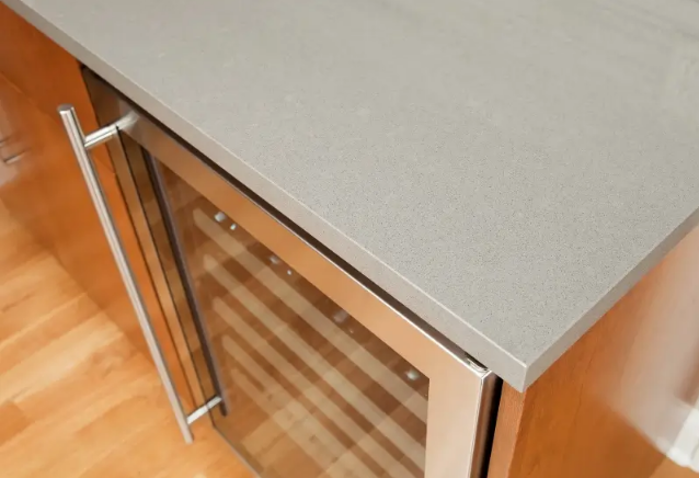
A countertop overhang is the distance that the countertop extends beyond the front or side of the base cabinets. This extension helps cover the junction between the countertop and cabinets while also providing functional space for people working or sitting at the counter.
The amount of overhang can vary throughout a kitchen. A countertop along a wall may require little or no overhang at the back, while the front edge typically extends beyond standard 24-inch-deep base cabinets. Islands, breakfast bars, and other seating areas may require substantially more space. The right measurement depends on how each portion of the countertop will be used.
Standard Countertop Overhang Dimensions
For many standard kitchen countertops, an overhang of approximately 1 to 1½ inches is common. With standard 24-inch-deep base cabinets, a countertop measuring about 25¼ inches deep creates an overhang of approximately 1¼ inches.
However, standard countertop overhang measurements can vary depending on the location of the countertop and the surrounding layout. Some common guidelines include:
- Front Edge: Allow approximately 1¼ inches of overhang beyond the cabinet fronts.
- Appliance Side: A countertop beside an appliance may have an overhang of approximately ⅛ to ¼ inch.
- Wall Edge: Countertops meeting a wall generally do not need an overhang.
- Counter Seating: Allow approximately 8 to 10 inches for comfortable seating.
- Bar Seating: An overhang of approximately 8 inches is a common starting point.
These measurements provide a useful starting point, but your specific countertop measurements should account for the layout, intended use, and support requirements of the finished surface.
Kitchen Countertop Overhang Options
Not every part of a kitchen needs the same overhang. A standard working countertop typically needs only enough extension to provide a finished edge beyond the cabinets. A peninsula or island with seating requires additional legroom.
For example, an island designed for people to sit at may benefit from an 8- to 10-inch breakfast bar overhang. This gives people room for their knees and legs when sitting at the counter.
A standing bar may be able to use a somewhat smaller overhang. The existing guidance from Signature Marble and Granite notes that a bar overhang can be approximately 6 inches when people will be standing, but reducing the overhang is not recommended when the space is intended for seated use.
The goal is to balance comfort, appearance, and structural requirements rather than automatically choosing the largest possible overhang.
Countertop Overhang Support Requirements
One of the most important considerations when planning a larger overhang is support. Granite, quartz, and other countertop materials have weight and structural requirements that need to be considered before installation.
A modest standard overhang typically does not require the same support considerations as a large seating area. As the overhang increases, additional support may become necessary.
An overhang above approximately 10 inches may require additional bracing. Overhangs exceeding approximately 16 inches can require vertical supports or posts. The appropriate solution depends on the countertop material, thickness, cabinet layout, and overall design.
This is why countertop overhang support should be addressed during the design and fabrication process rather than after the countertop has been installed.
Factors That Influence Overhang Measurements
Several factors can affect the appropriate countertop overhang dimensions for your project. Looking only at a standard measurement may not provide enough information to determine what will work best. Consider the following:
- Cabinet Depth: Standard 24-inch-deep base cabinets often work with a countertop depth of approximately 25¼ inches, creating a 1¼-inch front overhang.
- Countertop Use: A working surface, island, breakfast bar, and seating area may all require different measurements.
- Available Space: A larger overhang can provide additional legroom, but it also takes up more floor space.
- Countertop Material: Different materials and thicknesses can have different support requirements.
- Seating Arrangement: The number and placement of stools can influence how much space is needed beneath the countertop.
- Structural Support: Larger overhangs may require brackets, bracing, or other support methods.
Careful planning helps ensure the finished countertop is both functional and appropriately supported.
Finding the Perfect Countertop Overhang
There is no single overhang measurement that works for every kitchen. A standard front overhang of approximately 1¼ inches can be appropriate for many countertops, while seating areas generally require significantly more space.
The best approach is to consider how each portion of the countertop will function before finalizing the design. Professional fabrication and installation can also help ensure the selected countertop overhang works with the cabinets, material, and overall layout.
Create the Right Countertop Design with Signature Marble and Granite
The right countertop dimensions can make a noticeable difference in how comfortable and functional your kitchen feels. Whether you are planning a standard countertop, island, or seating area, Signature Marble and Granite can help you select materials and develop a layout that fits your space.
Serving homeowners throughout Utah County, UT, Salt Lake County, UT, Davis County, UT, Summit County, UT, and Weber County, UT, Signature Marble and Granite offers professional countertop fabrication and installation. Contact the team for a free estimate and discuss your countertop measurements, material options, and design requirements.
Frequently Asked Questions About Countertop Overhang
Countertop overhangs can vary depending on the material, layout, and intended use of the space. Here are answers to some common questions homeowners have when planning their countertops.
Does Countertop Thickness Affect How Much Overhang Is Possible?
Yes. Countertop thickness can be one factor when determining how much overhang is appropriate and what type of support may be necessary. Larger overhangs should be evaluated based on the countertop material, thickness, and overall design.
Can an Existing Countertop Overhang Be Modified After Installation?
Modifying an existing overhang may be possible in some situations, but the feasibility depends on the countertop material, existing installation, and desired change. A professional evaluation is recommended before making modifications.
Are Overhang Requirements Different for Granite and Quartz Countertops?
The appropriate overhang and support requirements can vary based on the material and its specifications. Granite and quartz should both be evaluated according to their specific characteristics, thickness, and the planned application.
How Much Space Should Be Left Between Bar Stools Under a Breakfast Bar?
An overhang of approximately 8 to 10 inches is commonly recommended for comfortable countertop seating. The number and size of stools should also be considered when planning the available space.
Can a Countertop Overhang Increase a Home’s Resale Appeal?
A well-designed countertop overhang can contribute to a kitchen that is comfortable, functional, and visually appealing. While it should not be viewed as a guarantee of increased resale value, thoughtful countertop design can enhance the overall usability of a kitchen.